
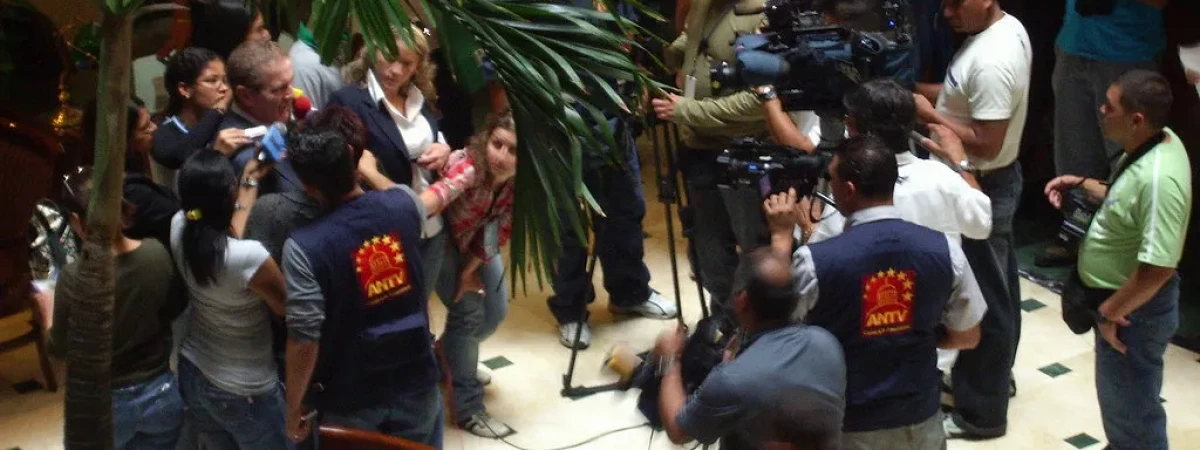
Florida Board Certified in Immigration & Nationality Law (Florida Bar Member #7439). For foreign journalists, photographers, broadcasters, and media support staff coming to the United States in their professional capacity, the I (information media) visa is the right path. We help individual journalists and bureaus navigate eligibility and renewals.
Who qualifies for an I visa
The I visa is for "representatives of the foreign press, radio, film, or other information media" coming to the U.S. to engage in their profession. Eligible applicants include:
- Reporters, journalists, editors, and writers for foreign media outlets.
- Film crews shooting documentary or news content (commercial entertainment film generally requires O or P visas, not I).
- Photographers and videographers for foreign news organizations.
- Editorial staff of foreign-based publications doing U.S.-based reporting.
- Independent journalists with a credentialed assignment from a foreign outlet.
What the I visa does — and does not — cover
- Permitted: primary purpose is informational (news gathering, reporting, journalism, factual documentary). The home office and the U.S.-side activities must serve foreign audiences.
- Not permitted on I: commercial entertainment production, scripted dramatic content, paid advertising productions. These typically require O-1 (extraordinary ability), P (entertainers), or H-1B.
- Activities outside primary employer scope — moonlighting for U.S. entities — is not authorized.
Term and family
I visa holders can be admitted for the duration of their employment with the foreign media outlet. Spouses and unmarried children under 21 can come as I derivatives. I-2 spouses cannot work on I-2 status alone.
How we help
I visas are usually obtained at consulates rather than via USCIS petitions, but the documentation matters: credentials letter from the foreign employer, evidence of the outlet's circulation/audience, description of the assignment, evidence of journalistic background, and supporting proof of foreign-audience focus. We prepare the documentation packet and brief the journalist on consular interview expectations.
Talk to a Florida Board Certified Immigration Attorney
Free 30-minute consultation. No obligation. Confidential. Available in English or Spanish. Serving all of Central Florida from our Orlando office since 1996.
Related Practice Areas
O-1 Extraordinary Ability Visas
For individuals at the top of their field — scientists, executives, athletes, artists, performers — the O-1 visa is a fast and flexible…
Learn more → H-1B Cap · Transfer · Extension · LCAH-1B Specialty Worker Visas
The H-1B specialty worker visa is the most common path into the United States for foreign professionals — and one of the most competitive…
Learn more → B-1 Business · B-2 Tourist · ESTAB-1 / B-2 Visitor Visas
Visitor visas are the most common entries to the United States — and the most commonly misunderstood. We help applicants apply, applicants…
Learn more →Frequently Asked — I Visa · Journalists · Foreign Media
I am a freelance journalist — can I qualify for I?
Yes, if you have a credentialed assignment from a foreign outlet that confirms your role and duration. Independent freelancers without specific assignments may struggle to demonstrate the required foreign-employer relationship. We help structure documentation to support the case.
My documentary has commercial distribution. I or O?
It depends on the content and audience. Pure news/factual documentary work for foreign audiences fits I. Documentaries with significant commercial entertainment value, or content for primarily U.S. audiences, may require O-1 (if the filmmaker has extraordinary credentials) or other categories.
Can my spouse work on I-2?
No. I-2 derivatives cannot work in the U.S. on I-2 status alone. A spouse who wants to work would need her own visa category (H-1B, O-1, F-1 with OPT, etc.) or a green card.
How do I schedule a consultation?
Send the form below, call the office, or email us, and we will get back to you. The first consultation is free, and we can hold it in English or Spanish. Bring any notices you have already received from USCIS or the immigration court, since those set the deadlines that matter most.
4.4 out of 5 across 25 Google reviews.
“After 25 years of waiting he helped us to get our Green cards.” — Rosa Nuňez Picasso, Google review