
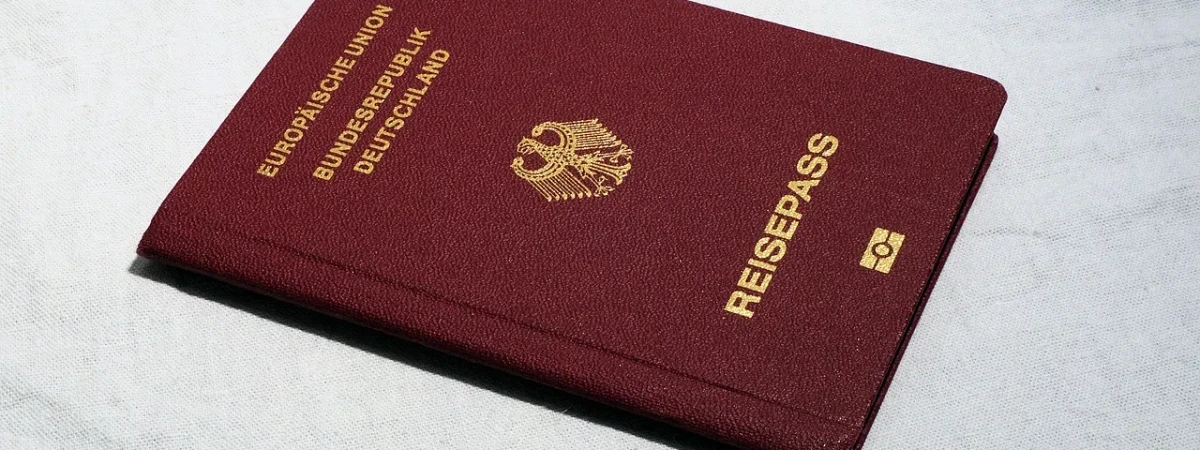
Florida Board Certified in Immigration & Nationality Law (Florida Bar Member #7439). Lawful permanent residence, the green card, is the goal of most U.S. immigration cases. If you are looking for an immigration lawyer for green card matters in Central Florida, this is the page for it: we have handled every category since 1996, from family-based adjustment of status and consular processing for a spouse or parent to employment-based cases such as EB-2 NIW self-petitions and EB-5 investor visas.
How do I get a green card in Florida?
Almost every green card comes through one of five routes: a family petition, an employer or self-petition in an employment category, asylee or refugee status held for a year, the annual Diversity Visa lottery, or a special program like VAWA, U/T visas or the Cuban Adjustment Act. Which route you qualify for is decided by your relationship, your work, or your history, not by preference. The first job at a consultation is identifying every category you fit, because more than one is common.
A green card is also usually the longest stage of the process rather than the last one. According to USCIS, the median time spent as a lawful permanent resident before naturalizing was 7.5 years for everyone who became a citizen in fiscal year 2024 (USCIS, Fiscal Year 2024 Naturalization Statistics). Florida accounted for 93,300 of the 818,500 new citizens naturalized that year, second only to California, so the wait we describe below is the ordinary Florida experience rather than an outlier.
Family-based
The largest category. Spouses, parents, and unmarried children under 21 of U.S. citizens are immediate relatives with no annual cap; siblings, married children, and family of LPRs are subject to multi-year waits in family preference categories. For spouses specifically, read our step-by-step guide to getting a green card through marriage to a U.S. citizen. More about family-based.
Employment-based
- EB-1A — extraordinary ability (self-petition).
- EB-1B — outstanding researcher/professor.
- EB-1C — multinational manager/executive (no PERM).
- EB-2 — advanced-degree professionals or exceptional ability. PERM-required unless qualifying for the National Interest Waiver (EB-2 NIW).
- EB-3 — skilled workers, professionals, other workers. PERM required.
- EB-4 — special immigrants: religious workers, juvenile court dependents (SIJ), some military, and others.
- EB-5 — investor (regional center or direct investment).
Refugee / Asylee
Asylees can apply for adjustment of status to LPR after 1 year of continuous physical presence. Refugees follow a similar path. More about asylum.
Diversity Visa lottery
An annual lottery (DV-2026, DV-2027, etc.) administered by the State Department. Roughly 50,000 visas are issued annually to applicants from countries with low U.S. immigration rates. Selection is random; we assist with consular processing once selected.
Special programs
- U-visa to green card — crime victims who have held U status for 3+ years.
- T-visa to green card — trafficking victims.
- VAWA — abused spouses, parents, and children of U.S. citizens or LPRs.
- SIJ — Special Immigrant Juveniles.
- Cuban Adjustment Act — Cuban nationals after 1 year and 1 day of physical presence.
- NACARA, HRIFA — country-specific programs for Central American and Haitian nationals.
- Registry — for those continuously present since before January 1, 1972.
Can I apply for a green card while I am in the U.S.?
Yes, if you entered lawfully and a visa is available to you, the filing is adjustment of status on Form I-485 and you stay in the United States for the whole case. You can also apply for a work permit and Advance Parole while it is pending. If you are abroad, or you entered without inspection and need a waiver first, the case runs through a U.S. consulate instead.
What is the difference between adjustment of status and consular processing?
Adjustment of status is decided by USCIS while you remain in the country; consular processing is decided by a U.S. consulate abroad and you become a permanent resident at the moment you are admitted on the immigrant visa. Adjustment lets you work and travel while waiting. Consular processing skips the separate adjustment step. The choice usually follows where you are and how you entered, not what you would prefer.
Most green card cases end with one of those two procedural choices:
- Adjustment of status (Form I-485) — for applicants in the U.S. with lawful entry. Stay in the U.S. throughout. Eligibility for EAD and Advance Parole during the wait.
- Consular processing — for applicants abroad (or those who must depart, often after an unlawful-presence waiver). Final interview at a U.S. consulate; immigrant visa issued; entry on the visa is the LPR admission.
The government fees differ between the two routes. For an adjustment case the I-130, I-485, I-765 and I-131 are all paid to USCIS at filing; our USCIS filing fee calculator adds them up, paper or online, from the current fee schedule.
How long does permanent residency take in Central Florida?
An immediate relative of a U.S. citizen adjusting status here generally waits 10 to 14 months from filing to the interview at the USCIS Orlando Field Office. Capped categories are governed by the monthly State Department Visa Bulletin instead, so a sibling petition can run well past a decade regardless of how fast the paperwork is prepared. Employment cases add PERM and priority-date time on top. Your receipt notice is the only date that governs your case. The figure USCIS itself publishes for a family-based I-485 at the Orlando office, read every month, is on our USCIS Orlando processing times page.
What happens after I get the green card?
You can work for anyone, travel internationally within limits, petition for your own family members, and after five years, or three if you are married to a U.S. citizen, apply for naturalization. The limit that catches people out is travel: extended absences can break continuous residence and be treated as abandoning permanent resident status.
LPRs can travel internationally (with limits — extended absences abroad can break continuous residence and abandon LPR status), petition for family members, and after 5 years (or 3 with marriage to a U.S. citizen) become eligible for naturalization. We advise on travel, re-entry, abandonment risks, and the path to citizenship and naturalization.
Talk to a Florida Board Certified Immigration Attorney
Free 30-minute consultation. No obligation. Confidential. Available in English or Spanish. Serving all of Central Florida from our Orlando office since 1996.
Related Practice Areas
Citizenship & Naturalization
After years as a lawful permanent resident, naturalization is the final step on the path to becoming a United States citizen. Work with our…
Learn more → I-130 · I-485 · K-1 · K-3 · I-751Family-Based Immigration
Reuniting families is the heart of U.S. immigration law. Whether you are sponsoring a spouse, a parent, a child, or a sibling — and whether…
Learn more → PERM · H-1B · L-1 · EB-1/2/3Business & Employment-Based Immigration
From a startup hiring its first foreign engineer to a Fortune 500 transferring an executive, business immigration is fact-intensive and…
Learn more →Frequently Asked — Family · Employment · Investment · Asylum
How long does an employment-based green card take?
It depends heavily on category and country of birth. EB-1 cases (no PERM) for current-priority countries can finish in 12–18 months. EB-2 PERM for most countries runs 2–3 years. EB-2 and EB-3 for India and China face decades-long backlogs due to per-country caps. The State Department Visa Bulletin tracks current dates.
My I-485 has been pending — when can I get a work permit?
EAD applications filed concurrently with I-485 are typically issued in 4–8 months. The EAD lets you work for any employer (not just the sponsor) while the green card is pending — a critical AC21 portability flexibility for EB-2 and EB-3 applicants stuck in priority-date backlogs.
What does "priority date" mean?
Your priority date is the date USCIS or DOL accepts the underlying petition. It places you in the queue for an immigrant visa in your category and country of birth. The State Department Visa Bulletin lists "current" priority dates each month — when your priority date is current, an immigrant visa is available.
Can I keep my job mobility while waiting for a green card?
Yes, via AC21 portability. Once your I-485 has been pending for 180+ days and your I-140 is approved, you can change to a new job in the same or similar occupational classification without losing the green card case. The original I-140 remains valid; no new PERM is required.
I am abroad and just selected in the Diversity Lottery — what now?
You have a limited window to file the DS-260 immigrant visa application and supporting documents through the Kentucky Consular Center. Selection does not guarantee a visa — only entry to the queue. We help you complete the paperwork on time and prepare for the consular interview.
How do I schedule a consultation?
Send the form below, call the office, or email us, and we will get back to you. The first consultation is free, and we can hold it in English or Spanish. Bring any notices you have already received from USCIS or the immigration court, since those set the deadlines that matter most.
4.4 out of 5 across 25 Google reviews.
“After 25 years of waiting he helped us to get our Green cards.” — Rosa Nuňez Picasso, Google review